
Tuscaloosa County Booking Photos
A Tuscaloosa County booking photo starts as part of the jail booking record. Alabama law gives the sheriff a public prisoner-book duty for county-jail prisoners, including the prisoner's identity, charge, commitment order and date, and release order and date. The law does not turn the live online roster into a full photo archive. It does, however, make the sheriff release record the best local route when a person has left Tuscaloosa County Jail and the current roster no longer answers the question.
The photo question is narrower than the release question. A person may have a public release record without a photo being visible online. The TCSO current-custody search is protected by a human-verification screen, and the captured official pages do not expose every post-search booking-profile field. Research supports cautious wording: the sheriff roster or app may show a booking profile and photo after a successful search, but the photo should be confirmed by opening the official profile or requesting the booking record from TCSO.
For release status, use the release record. For the image, use the booking-photo channel that matches the custody path.
Where Tuscaloosa Mugshots Appear
A released person may drop out of the jail's live tools before a family member, attorney, or researcher captures the booking profile. That is why a Tuscaloosa County mugshot search should separate official jail records, app-based recent-arrest tools, state prison records, registry records, and news material. Each channel has a different purpose and a different limit.
| Channel | Photo status | How to use it |
|---|---|---|
| TCSO Who's in Jail | May show a current booking profile after verification | Use it for current custody first; a released person may no longer appear. |
| TCSO official app links | Recent-arrest discovery is listed; photo display is not confirmed in the official listing | Use as a recent booking lead, then confirm release through TCSO or court records. |
| TCSO booking-record request | Booking photo may be requested as part of the booking record | Ask the sheriff or jail records path for the booking/release record and any releasable photo. |
| ADOC inmate search | State-prison photo may appear while the person is in current ADOC custody | Use only when the person was transferred to or remains in Alabama prison custody. |
| ALEA registry and Tuscaloosa OffenderWatch | Registry profiles commonly include photos when public dissemination applies | Use only for registrable offenders; it is not a list of all released inmates. |
| Local news and TCSO incident summaries | May include a booking photo or arrest image | Use as context, then verify custody and court status with official records. |
TCSO App Booking Leads
The Tuscaloosa County Sheriff app listing says the app gives access to recent crime reports, local registered sex offenders, active warrants, most wanted people, TCSO notifications, social pages, videos, anonymous tips, and a way to see who has been recently arrested. That makes the app useful for recent booking discovery. It does not make the app a release archive, and the official listing does not confirm a 24-hour or 72-hour release-photo feed.
This distinction matters after release. A recent-arrest photo may help identify the correct booking, but the release itself is confirmed through the sheriff prisoner book, the jail or court record, VINELink when available, or the receiving agency if a transfer occurred. If the person is absent from the app or roster, that absence can mean release, transfer, name mismatch, human-verification limits, or an update lag.
For official recent-release context, use 24-Hour Releases for the same-day fallback path and 72-Hour Releases for a wider weekend or holiday window.
Request a Booking Photo
When the TCSO roster or app does not show the photo, the practical next step is a booking-record request. The request should be narrow and identity-based. Ask for the booking record and any releasable booking photograph tied to a specific person, booking date, arrest date, charge, or case number. If the release status is also needed, ask for the sheriff prisoner-book fields that show the order and date of release under Alabama law.
- Start with the person's full name and any known date of birth, arrest date, booking date, or case number.
- Check the TCSO Who's in Jail path only to see whether the person is still in custody.
- Contact the Tuscaloosa County Jail main desk or TCSO records channel and request the booking record, release record, and any releasable booking photo.
- Ask whether copy, certification, redaction, or pickup rules apply. The research did not find a fixed TCSO booking-photo fee.
- Use Tuscaloosa court records or Alacourt ACCESS to match the booking to the court order or disposition.
The TCSO mail page gives a useful current-custody clue because it says e-mail received for inmates no longer in custody will not be delivered. That fact does not publish a photo, but it supports the broader record rule: profile tools that work while a person is in custody may stop being useful after release. When the profile disappears, a records request is the more stable path for a booking photo and the related release fields.
ADOC and Registry Photos
ADOC is useful only for the correct kind of case. If a Tuscaloosa County defendant was transferred from the jail to Alabama prison after conviction, the county jail release may be a transfer to ADOC rather than a release into the community. The Alabama Department of Corrections inmate search is a current-inmate search, and ADOC states that historical data is not available online through the normal public search. A state-prison photo may appear while the person remains in ADOC custody, but a discharged state prisoner may not stay searchable there.
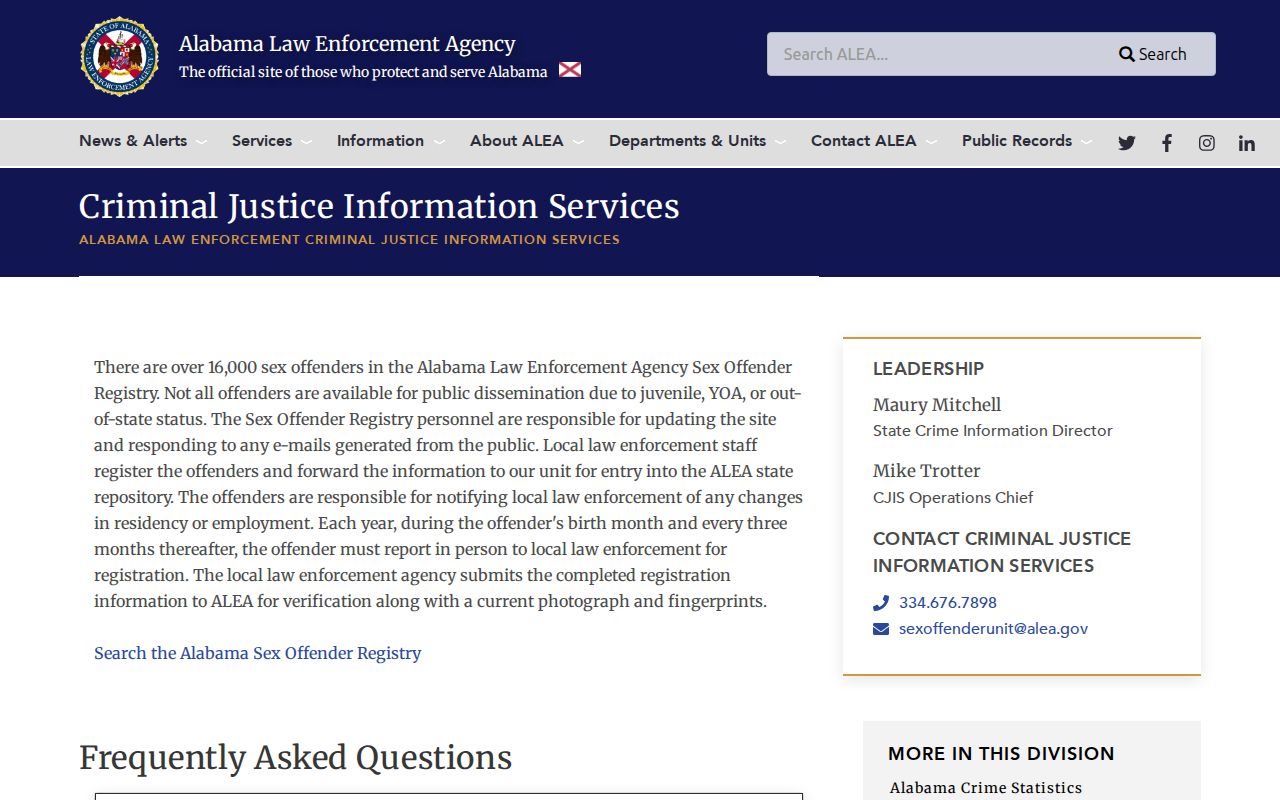
The registry path is even narrower. ALEA says Alabama's sex offender registry contains many offenders, but not all records are available for public dissemination due to juvenile, Youthful Offender Act, or out-of-state limits. Tuscaloosa County's OffenderWatch/SheriffAlerts search is a registry and public-notice tool, not a general mugshot database. Use it only when the law requires registry publication.
The ALEA sex-offender registry overview is a subject-fit public source for registry photo context.
Registry publication has its own rules. It should not be treated as proof that every released Tuscaloosa County inmate has a public photo there.
Tuscaloosa News Photo Trails
TCSO incident summaries and local coverage can explain why a booking photo, arrest image, or name mention remains findable after the live jail roster changes. Research identified TCSO annual incident summaries and local outlets that cover crime and courts as possible discovery paths. These sources can help connect an arrest event to a later court record, but they are not complete jail archives and may not update when a charge is dismissed, a case is expunged, or custody moves to another agency.
The official TCSO incident summaries are the better starting point than commercial mugshot galleries because they come from the sheriff's own publication path.
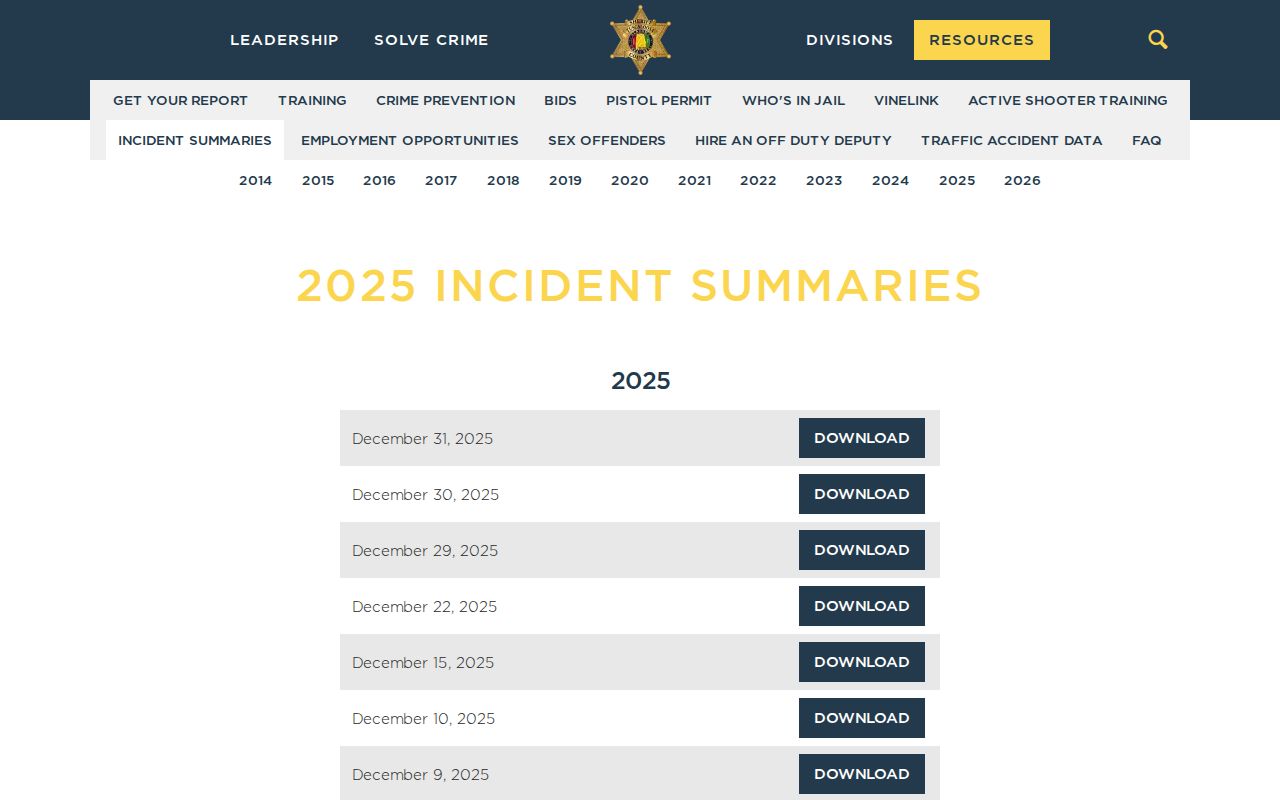
When a news or incident-summary item names a person, match it back to the jail release record and the court docket before drawing a conclusion about the case status.
Expungement and Photo Access
Expungement can change public access to a Tuscaloosa County booking photo. The Tuscaloosa County District Attorney expungement page says that when expungement is approved, the court orders expungement of court records and records held by law-enforcement agencies, with agency verification back to the court within six months. The source also notes exceptions for privileged investigation reports and district attorney files. That means a photo that once appeared in a law-enforcement record may later be restricted or removed from public release if a court order applies.
No Alabama-specific commercial mugshot pay-to-remove statute was confirmed in the official source sweep. Do not assume a paid removal claim is official. For an official record, use the court order, the TCSO records path, and the agency that published the record. For a private news or third-party copy, use that publisher's correction or removal process, but verify the official court and law-enforcement status first.
The local expungement page is directly relevant to released inmate records and booking-photo availability.
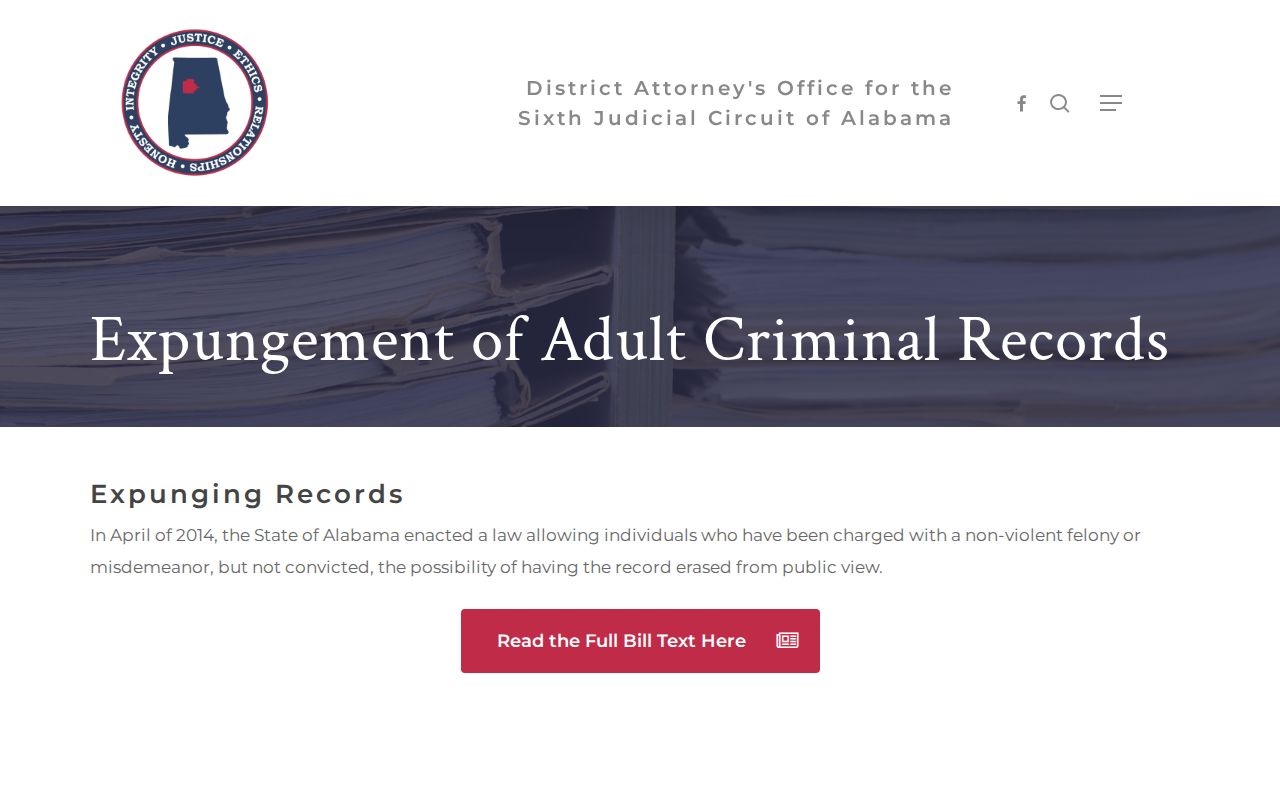
A court-approved expungement is the source to cite when asking an agency to restrict a booking photo connected to the expunged record.
Expungement also changes how older copies should be evaluated. A photo found through a stale roster capture, news story, or third-party mirror may not reflect the current public-record status after a court order. The official path is to confirm the expungement order with the court, then ask the agency that holds or published the law-enforcement record how it applies that order to the booking photo. Private copies may require separate publisher contact, but the court order is still the strongest source.
Avoid Pay Removal Sites
Commercial mugshot, data-broker, and pay-to-remove sites are not official Tuscaloosa County sources. They may mirror old booking images, miss later court orders, keep stale data, or charge for steps that do not change the government record. The safer path is to confirm the release through TCSO, the court, ADOC, ABPP, VINELink, or another official custodian first. Then address any private copy with the publisher after the official status is clear.
- Booking photo
- The image taken during jail booking or law-enforcement processing.
- Release record
- The custody record showing the order and date that ended jail custody.
- Expungement
- A court process that can restrict qualifying court and law-enforcement records after approval.
- Registry photo
- A photo published only when a separate registration law applies.
A careful Tuscaloosa County photo search also keeps the custody level straight. A county booking photo follows the jail booking event. An ADOC photo follows state-prison custody. A registry photo follows separate registration law. A news photo follows a publication decision by the outlet or agency. Mixing those sources can make an old arrest look like a current jail status, so each photo should be paired with its own date, source, and record type.
Note: A removed roster entry does not erase the underlying court record or the sheriff release record.